The Shadow Market: How Niche Entertainment Built a Billion-Dollar Resale Economy the Studios Never Planned For
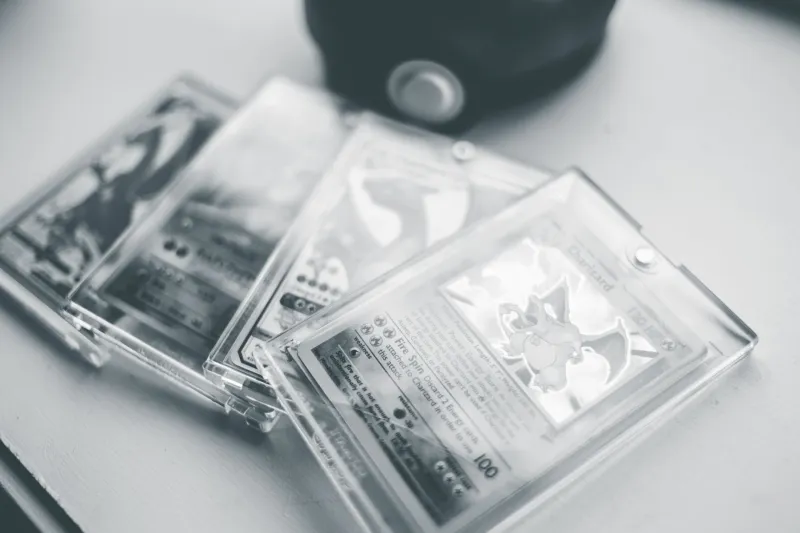
Somewhere right now, a sealed booster box of a discontinued trading card game is changing hands for $4,000 in a private Discord server. The transaction will be completed via PayPal Goods and Services, the buyer will leave feedback in a pinned thread, and the whole thing will be invisible to the publisher that originally sold that box for $120.
This is the resale underground — not underground in the criminal sense, but underground in the sense that it operates largely outside the visibility, and certainly outside the revenue capture, of the studios and IP holders that created the underlying products. It is enormous, it is sophisticated, and it is accelerating.
The Anatomy of a Secondary Market
Every niche entertainment resale economy has the same basic structure, even if the products look completely different.
At the base, you have a primary market: official products sold at retail prices through official channels. Above that sits a secondary market, where those products are resold at prices determined by demand rather than MSRP. And threading through both layers are the power players — the resellers, the price-setters, the community authorities who determine what's valuable and why.
What makes niche entertainment resale markets particularly interesting is how much of the pricing infrastructure is community-generated. There's no eBay algorithm setting the "fair" price for a first-edition Pokémon card or a limited-run enamel pin from an indie animation studio. The price is whatever the community has collectively decided it's worth, informed by a dense web of Discord conversations, subreddit posts, YouTube valuations, and the reputations of specific sellers.
This is both the market's greatest strength and its most significant vulnerability. Prices can be remarkably accurate — reflecting genuine collector demand with real precision — or they can be artificially inflated by coordinated buying, hype cycles, or the influence of a single high-profile collector making a public purchase.
Trading Cards: The Original Niche Resale Machine
If you want to understand how niche entertainment secondary markets function at their most developed, the trading card game space is your best case study.
Magic: The Gathering has maintained a robust secondary market since the early 1990s. The key insight the game's publisher, Wizards of the Coast, stumbled into was that artificial scarcity — some cards printed in much smaller quantities than others — created a collector tier that operated completely independently of the game itself. People began buying, selling, and trading cards as financial assets, not just gameplay pieces.
This created a secondary economy that now dwarfs the primary one in certain segments. A Black Lotus from the original 1993 Alpha print run recently sold for over $500,000 at auction. Wizards of the Coast received exactly zero dollars from that transaction.
The company has spent decades trying to recapture some of that value — through buylist programs, tournament prize support, and official card marketplaces — with limited success. The secondary market has its own gravity, its own authorities, and its own rules. It doesn't need the publisher's participation.
The Anime Figure Market: Where Scarcity Is Manufactured
The Japanese anime merchandise industry, and particularly the high-end figure market, represents a more recent and arguably more sophisticated resale economy.
Limited-run figures from manufacturers like Good Smile Company or Alter are produced in fixed quantities, sold through a pre-order system, and then — officially — never made again. This built-in scarcity is partly logistical and partly intentional. Manufacturers have learned that limited production runs drive secondary market premiums, which in turn generate the kind of community conversation that functions as free marketing for future releases.
The resale infrastructure that has grown up around this market is remarkable. Dedicated Facebook groups, Discord servers with thousands of members, and specialty websites like MyFigureCollection serve as both community hubs and informal price-tracking services. Experienced collectors can tell you, with reasonable accuracy, what a specific figure will sell for on the secondary market six months after its release window closes — and they're often right.
What's interesting from a business perspective is how this market has created an entirely new category of professional participant: the figure flipper. These are buyers who treat limited anime merchandise the way day traders treat stocks — studying pre-order numbers, tracking manufacturer history, and making calculated bets on which releases will appreciate significantly on the secondary market.
Some of these operations are surprisingly large. One reseller operating primarily through Instagram and a private Discord reportedly moves six figures annually in anime merchandise alone.
The Power Players Nobody Talks About
Every mature niche resale market has a small group of individuals who function as de facto market makers — people whose buying and selling decisions move prices across the entire ecosystem.
In the vintage video game space, these are the graders and authenticators whose opinions can add or subtract thousands of dollars from a single cartridge's value. In the anime figure market, they're the collectors with massive Instagram followings whose "grail" purchases signal to the community what's worth chasing. In the trading card space, they're the content creators whose pack openings can trigger buying frenzies that clear secondary market inventory within hours.
These individuals have genuine economic power, and most of them have it entirely outside any formal structure. They didn't get appointed. They accumulated influence through community participation, demonstrated knowledge, and consistent presence — and now they shape markets that move real money.
Studios and IP holders are almost universally behind in understanding this dynamic. By the time a major publisher notices that a specific card or figure has become a secondary market phenomenon, the value has already been captured by the resellers and community authorities who saw it coming first.
What the Studios Are Finally Starting to Figure Out
There are signs that some IP holders are starting to engage with their secondary markets more deliberately, rather than ignoring them or trying to shut them down.
Bandai Namco has experimented with "web exclusive" figure releases that are designed from the start to have secondary market value — limited availability, premium production, and pre-announced rarity. It's an attempt to participate in the scarcity economy rather than just enabling it accidentally.
Some trading card publishers have introduced authentication and grading partnerships that let them capture a small fee from secondary market transactions. It's not a revolution, but it's an acknowledgment that the secondary market is real, permanent, and worth engaging.
What none of them have fully cracked is the community infrastructure question. The resale underground isn't just a market — it's a social ecosystem with its own norms, authorities, and culture. You can't buy your way into that. You have to earn it, the same way the power players did.
Until studios figure that out, the shadow market will keep running, the Discord servers will keep doing their thing, and the value will keep flowing to the people who showed up first and paid attention longest.
Which, honestly, seems pretty fair.