Staying Small on Purpose: The Underground Shows That Said No to the Big Time
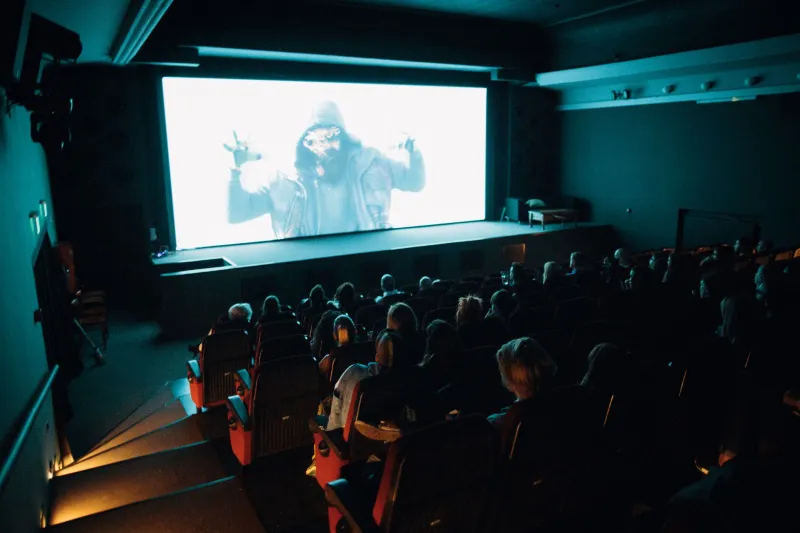
There's a particular kind of dread that hits a dedicated fan when their favorite underground show starts trending. You've seen it happen. A podcast you've been following for three years gets a shoutout from a celebrity. A web series you discovered through a Reddit thread lands on a "hidden gems" list in a major outlet. Suddenly, the comment sections feel different. The inside jokes need explaining. The creator starts hedging.
For a lot of niche entertainment, mainstream attention isn't a reward. It's a threat.
The Offer on the Table
It happens more than most people realize. A show builds a devoted following — maybe 40,000 listeners, maybe 80,000 YouTube subscribers — and the emails start coming in. Podcast networks. Streaming development deals. Brand sponsorships with strings attached.
Creators in these situations describe a version of the same conversation: the interested party loves what they're doing and wants to "scale it up" or "bring it to a wider audience." What they're really saying, if you read between the lines, is that they want to sand off the weird edges. The parts that make the thing what it is.
One independent horror anthology creator who runs a subscription-based video series out of the Pacific Northwest — who asked not to be named because he didn't want to draw attention he was actively avoiding — put it bluntly: "Every single deal I've been offered came with a conversation about what we'd have to change. Not suggestions. Requirements. And the requirements were always the same things my audience loves most."
He turned down three separate development conversations over two years. His audience, which hovers around 55,000 paying subscribers, knows about it. He's been transparent with them. And their response, almost universally, has been relief.
What Gets Lost in Translation
The entertainment industry has a long and well-documented history of taking something strange and specific and smoothing it into something broadly palatable. It's not malicious — it's structural. Platforms and networks are built to serve massive audiences, and massive audiences require lowest-common-denominator appeal. That's not an insult; it's just math.
But what works for a show trying to hit 10 million viewers is often poison for something that thrives on specificity. The humor that lands for 30,000 deeply online horror fans doesn't translate to a general streaming audience. The references that build community cohesion become alienating to newcomers who haven't put in the time. The intimacy that makes a small show feel like a secret worth keeping evaporates the moment it becomes everyone's business.
This is what some creators are calling the niche ceiling — not a limitation, but a deliberate choice to stop climbing. To stay in the room where the air is still good.
The Business Case for Obscurity
Here's the part that surprises people who haven't been paying attention: staying small can be financially sustainable in ways that weren't possible even ten years ago.
Direct-to-audience monetization has changed the math entirely. Patreon, Substack, Memberful, and similar platforms let creators build real revenue from relatively modest but deeply committed audiences. A show with 20,000 listeners who each pay $8 a month is generating $160,000 in monthly recurring revenue. That's not a side hustle. That's a business — and one that doesn't require a network deal, a streaming partnership, or a single advertiser.
The trade-off is that you have to actually keep those 20,000 people happy. Not 2 million passive viewers who'll tolerate whatever — 20,000 people who chose you specifically and will leave the moment you stop being the thing they chose.
That accountability cuts both ways. It's a creative constraint, but it's also a protection. You can't drift toward the mainstream because your audience will notice immediately and tell you about it.
The Fans Who Prefer It This Way
There's a particular kind of fan loyalty that forms around niche content, and it's qualitatively different from the loyalty that forms around mainstream entertainment. It's less parasocial and more communal. The fan doesn't just love the show — they love being part of the group of people who love the show.
When that group stays small, it stays legible. You can know the other fans, at least in the aggregate. You share a frame of reference. There's a shared vocabulary. And critically, there's a sense that your fandom means something — that you found this thing, that you've been here, that it belongs to you in some meaningful way.
Mainstream success dissolves all of that. Not always immediately, but reliably. The community that formed around a small show doesn't scale. It either fractures or it gets diluted by newcomers who don't share the same investment in the thing's history and identity.
For a lot of dedicated fans, the creator's willingness to say no to growth isn't just admirable — it's the whole point. It's proof that the creator values what they've built with their audience more than what they could build without them.
When the Ceiling Is the Feature
What's interesting is that this isn't new behavior — it just has new infrastructure. Cult films have always had devoted audiences who treasured their obscurity. Underground music scenes have always had a complicated relationship with crossover success. The difference now is that creators have real economic tools to sustain themselves without crossing over, and audiences have real channels to support them directly.
The niche ceiling, in other words, is no longer a ceiling at all. It's more like a roof. Something you build on purpose, to keep the weather out.
Some creators will always want to grow. Some fanbases will always want their favorite thing to get the recognition it deserves. That tension is real and it's worth taking seriously.
But for a growing corner of the entertainment landscape, small isn't a failure state. It's the goal. And the communities that form around that shared commitment to staying intentional — staying specific, staying weird, staying theirs — are some of the most durable things happening in entertainment right now.
That's not nothing. That might actually be everything.